Record Heat and Disasters: Asia's Warming Woes

Even while there are records that can be broken, including Olympic ones, these monthly temperature extremes aren't medal-worthy. However, China wasn't the only Asian nation to achieve a number of firsts in 2024.
The World Meteorological Organization (WMO) said Monday that the continent is warming twice as quickly as the worldwide average. This rate of warming, which doesn't seem to be slowing down, is having disastrous effects on people's lives and means of subsistence throughout the area, and no nation is immune.
WMO Secretary-General Celeste Saulo stated on Monday that "an unacceptably high toll is already being exacted by extreme weather."
According to the WMO research, Asia's vast landmass is causing it to warm twice as quickly as the rest of the world, which explains why land temperatures rise more quickly than sea temperatures.
According to the paper, "Humans and natural systems are greatly impacted by variations in surface temperature."
The Indian and Pacific waters' surface temperatures reached record highs in 2024, indicating that the waters surrounding Asia are likewise warming.
Furthermore, the region was devastated by protracted heat waves that occurred on land and at sea, which caused the glaciers to melt and the sea levels to rise.
Record rains devastated certain Asian nations and people. For instance, a deadly landslide in northern Kerala, India, claimed the lives of almost 350 people.
The greatest floods in 70 years occurred in Kazakhstan, a country with hundreds of glaciers, as a result of record rainfall and snowmelt.
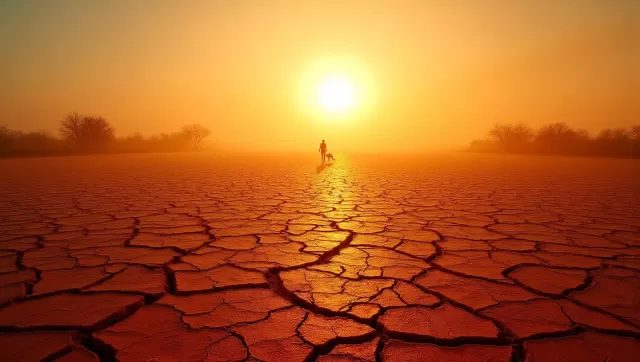
The very opposite issue—insufficient rainfall—ravaged others. For instance, a summer drought in China devastated hundreds of thousands of hectares of crops and impacted approximately 4.76 million people.
In the research, WMO stressed that installing more extensive early warning systems in conjunction with capacity development initiatives that make communities more resilient is the only way to adapt to these more polar weather patterns.
Despite stating that more extensive action was required, the WMO assessment praised Nepal's achievements in putting in place early warning systems that track the likelihood of floods, among other things.
Extreme rains in Nepal on September 26 and 28, 2024, caused floods and landslides across vast areas of the nation. Following the climatic emergency, 246 individuals lost their lives, 178 were injured, and more than 200 were missing.
Even though the crisis had a severe impact, early flood warning systems allowed emergency personnel to swiftly reach the most affected areas and allowed people to plan for evacuation.
"The flooding was thus severe for the 1st time in 65 years. Thanks to preparation and rescue efforts, we had no deaths, but the damage was significant," stated Ramesh Karki, the mayor of Barahakshetra, an Eastern Nepalese municipality that was impacted.
Furthermore, thorough national emergency finance mechanisms made sure that money for reconstruction and humanitarian needs was distributed swiftly across the nation.
WMO stated that in order to keep enhancing these systems, they are collaborating with the Nepalese government and other partners.